

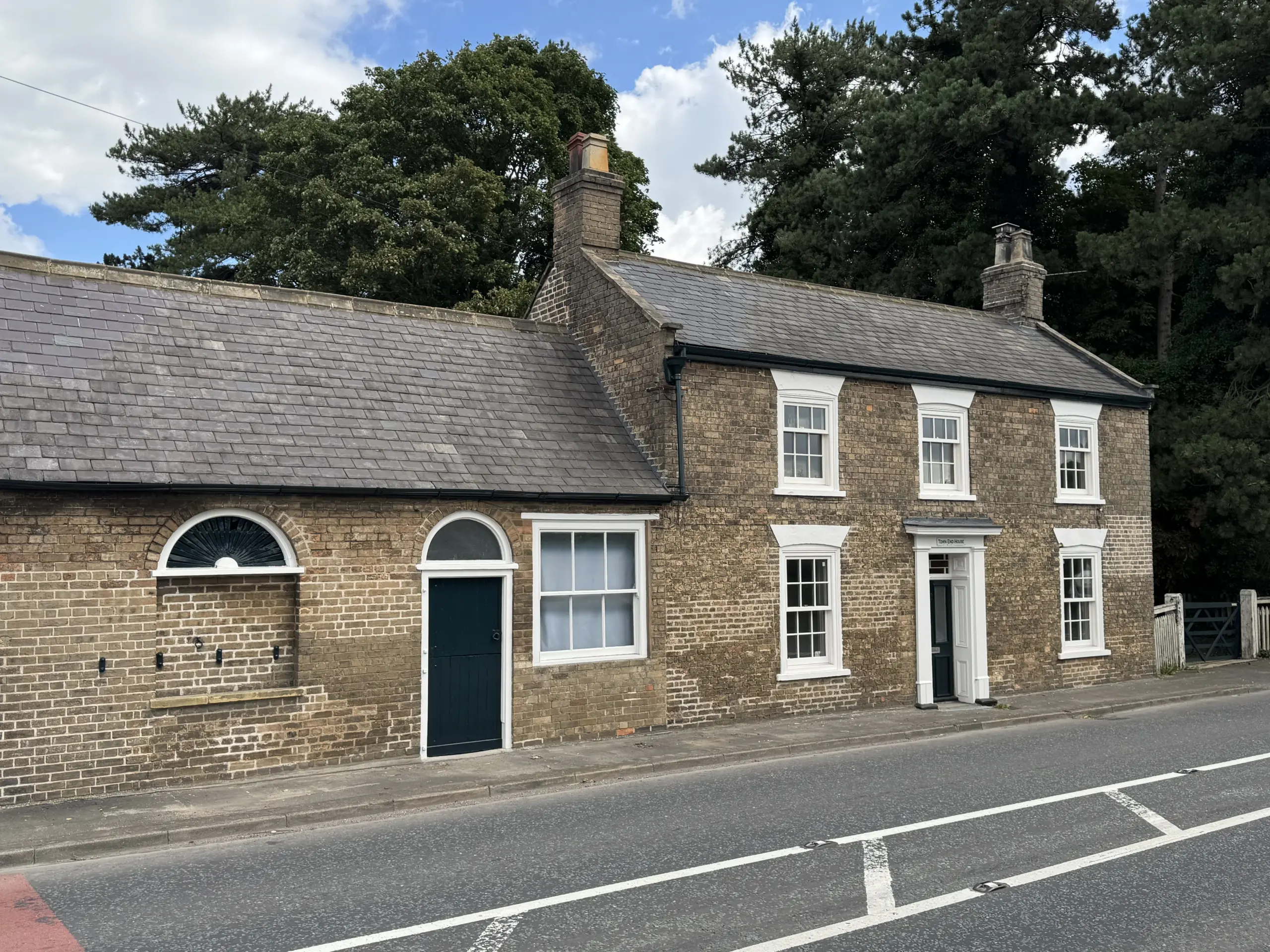
If you live in an older home, your windows have a story to tell. They are often the most telling feature of a property’s age and architectural lineage, holding clues to when the house was built, what fashions were in vogue at the time, and whether anything has been altered along the way.
For homeowners thinking about restoration, replacement, or even just understanding what they have, learning to read the clues in your own windows can be genuinely useful. It helps you talk to architects, conservation officers and joiners with confidence, and it can save you from specifying something out of keeping with the period.
At Pelham Joinery, we’ve been working with heritage windows for over a century, and dating windows is one of the first things we do whenever we visit a period property. The good news is that the tell-tale signs are mostly visible from where you’re standing right now. Here’s what to look for.
Start with the glazing bars
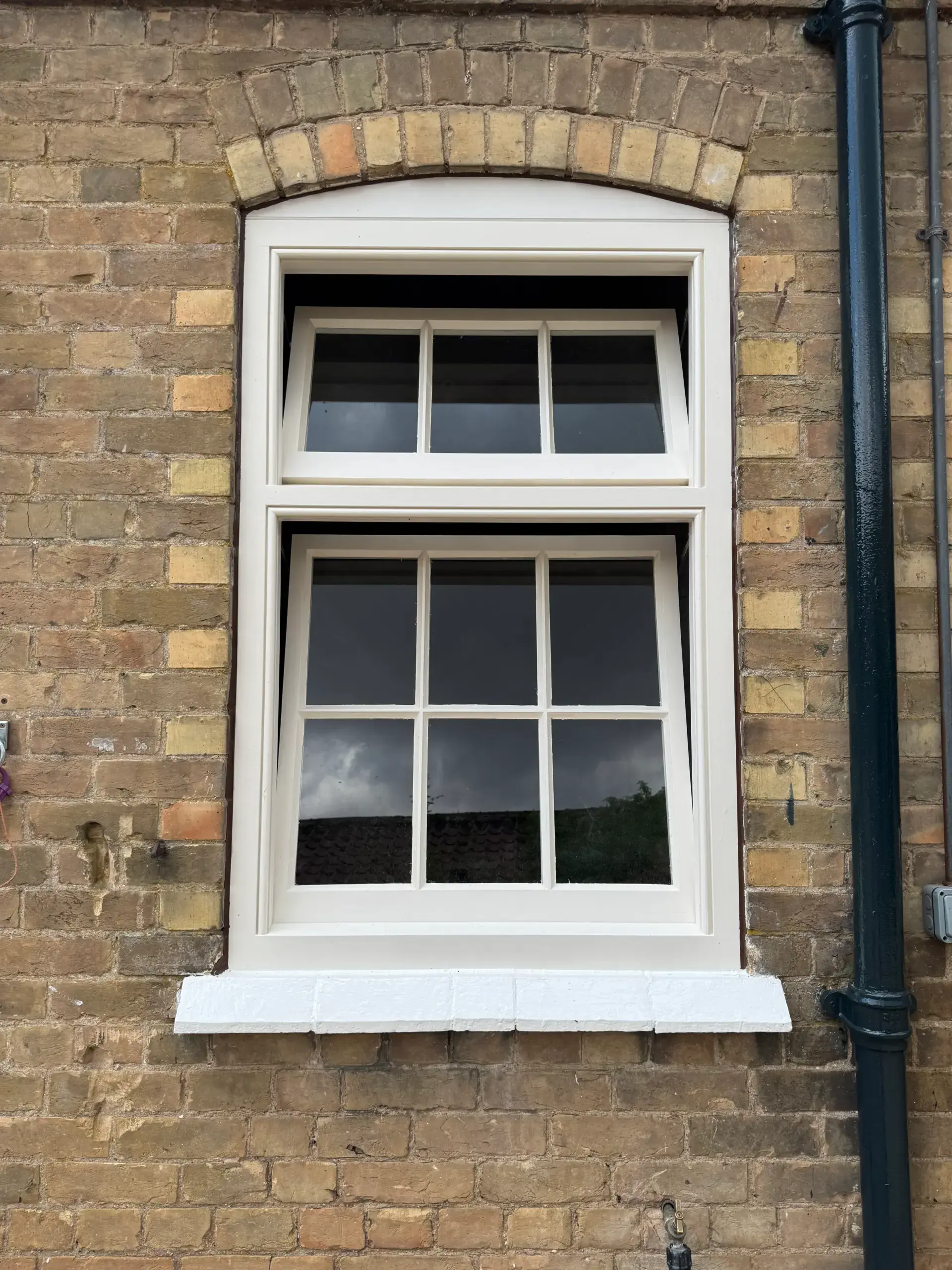
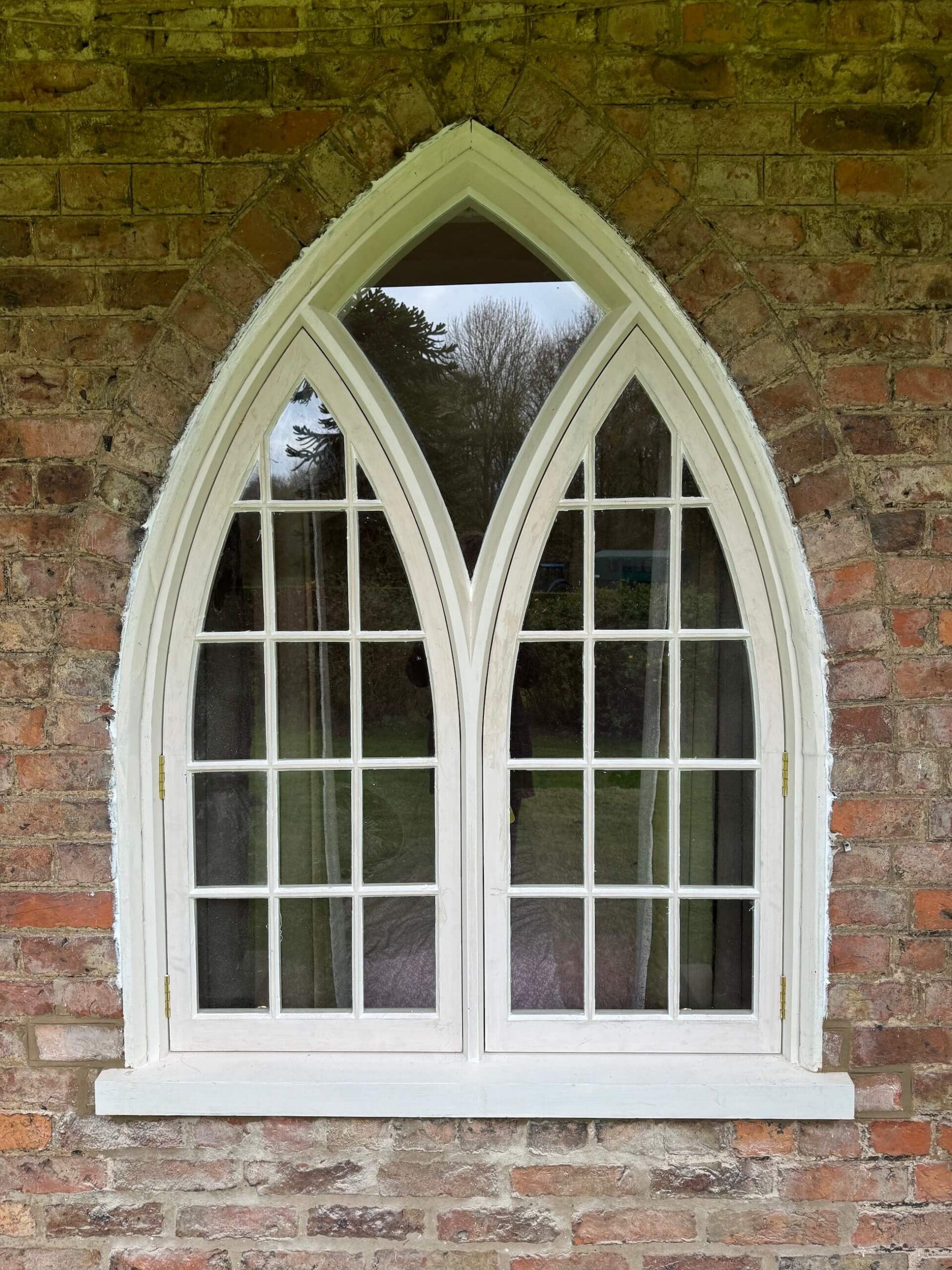
The glazing bars, also called astragals, are the slim timber sections that divide a sash window into individual panes. Their thickness is one of the most reliable indicators of a window’s age.
Early Georgian glazing bars were typically chunky, up to 30mm wide, with bold ovolo or ogee mouldings. As glass production improved through the 18th century and panes could be made larger and stronger, glazing bars became progressively slimmer. By the late Georgian and
Regency periods, you might see bars as fine as 16 to 22mm.
Victorian glazing bars are slimmer still, often down to around 13 to 16mm, with neater profiles. By the late 19th century, technology had advanced to the point where many windows had no glazing bars at all in the main panes, with one or two large sheets of glass per sash instead.
If your window has thick, robust glazing bars dividing the sashes into many small panes, you’re most likely looking at something Georgian or earlier. If the bars are slim and there are only one or two panes per sash, the window is almost certainly Victorian or later.
Count the panes
The number of panes per sash is another quick clue, although it should always be read alongside the glazing bar evidence.
- Six over six (6/6) is the classic Georgian arrangement, with each sash containing six panes, three across and two down.
- Two over two (2/2) became typical in mid to late Victorian houses, with larger sheets of glass dividing each sash neatly down the middle.
- One over one (1/1) is a hallmark of high Victorian and Edwardian properties, where plate glass was the height of modernity.
- Six over one or eight over one is distinctly Edwardian, with the upper sash divided into smaller decorative lights and the lower sash left as a single pane to maximise light.
Be cautious here, though. Plenty of Georgian houses had their sashes replaced with one-over-one Victorian panes when fashions changed, and many Edwardian houses deliberately imitated Georgian patterns. Pane count narrows the field; it doesn’t always settle the question.
Look for sash horns
Sash horns, sometimes called joggles, are the small curved or moulded extensions on the lower corners of the upper sash. They look like little decorative tails, and they’re one of the most useful dating clues in British window history.
Before about 1840, sashes were jointed using simple mortise and tenon joints with no horns at all. As glass technology improved and panes became larger and heavier, the corners of the sash needed extra strength to hold the weight without splitting. The horn was the joiner’s structural solution, and it stuck.
If your window has no horns, the sash itself is most likely Georgian or early Victorian. If it has small, neat horns, you’re probably looking at mid to late Victorian work. Larger, more decorative horns tend to be Edwardian, often shaped in curves, ogees, or even small acorn finials.
A word of caution. Replacement sashes have been fitted to older windows for as long as sashes have existed, and a Victorian replacement sash in a Georgian frame is very common. The horn dates the sash, not the building.
Look at the glass itself
Even the glass can give you a clue, although you may need to look closely.
Crown glass, the standard glazing material until about 1830, was hand-blown and spun into discs before being cut. It tends to have subtle ripples, slight distortions, and the occasional small bubble. Light reflecting off Georgian glass dances in a way that modern float glass simply cannot match.
Cylinder and plate glass, which dominated through the Victorian period, was rolled rather than spun. It’s flatter and more uniform than crown glass but still has minor imperfections and a slightly wavy quality when viewed at an angle.
Float glass, invented in the late 1950s, is what almost all modern glass is. It is perfectly flat, perfectly uniform, and instantly distinguishable from anything earlier.
If your windows still contain their original glass, you have something special. Many homeowners don’t realise until we point it out.
Consider the proportions
The overall proportions of a window are heavily influenced by the era in which it was made.
Georgian sashes are typically tall and narrow, with an upper and lower sash of equal height. The classical proportions of Palladian architecture defined the shape, and Georgian builders followed the rules carefully. Look at a row of Georgian terraces, and you’ll see windows getting shorter as they rise through the storeys, reflecting the social importance of each floor.
Victorian sashes tend to be larger overall, often with the lower sash slightly deeper than the upper. Bay windows became common, particularly from the 1850s onwards, adding light and a sense of grandeur to middle-class homes.
Edwardian windows broke from strict symmetry. Bay windows became more elaborate, often with three or four lights, and upper sashes were frequently subdivided into small leaded or stained-glass panes for decorative effect. Casements alongside sashes were also common.
A quick word on Arts and Crafts windows
The Arts and Crafts movement, roughly 1880 to 1914, sat alongside the late Victorian and Edwardian periods, but its windows look quite different from anything else.
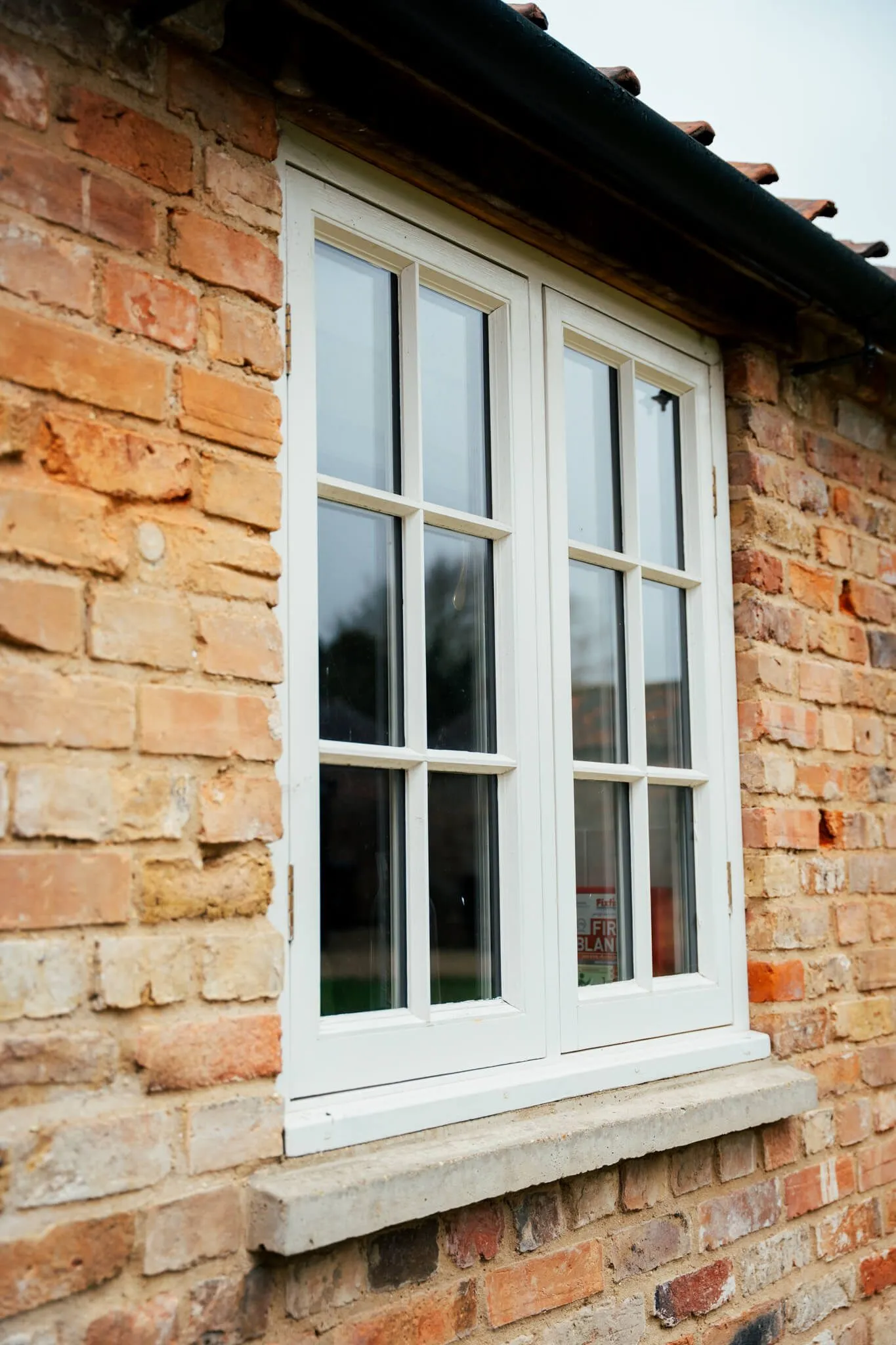
Where Georgian and Victorian houses are dominated by the sash, Arts and Crafts properties often feature timber casements with leaded lights, stone or oak mullions, and a deliberately handmade quality. Lead cames divide the glass into small geometric panes, often with the occasional coloured or bull’s-eye insert. Casement fittings are typically wrought iron rather than brass.
If your windows feel less formal, with a strong sense of craftsmanship and a slightly cottage-like character despite being clearly turn-of-the-century in date, you’re probably looking at Arts and Crafts influence. Designers like Voysey, Lutyens and Baillie Scott set the tone, and the style spread quickly through the larger detached houses of the period.
Putting it all together
Dating a window is rarely about a single clue. It’s about reading several features together and weighing what you find. Original glazing bars, original glass, the right horn style, and the right proportions all pointing to the same era are strong evidence. Mixed signals, with chunky bars and modern glass, or no horns and Victorian-sized panes, almost always mean the window has been altered, replaced or repaired at some point in its life.
That isn’t a problem. Most period houses have had their windows worked on at least once, and a Victorian sash sitting comfortably in a Georgian house is part of the building’s history rather than a flaw in it. What matters is understanding what you have, so that any future work respects the property’s character.
Why it matters
For most homeowners, the practical reason to date your windows is to inform any restoration or replacement work you’re planning. The wrong style of replacement window can devalue a period property, fail to gain conservation officer approval, or simply look wrong on the building.
A skilled heritage joiner can match anything you have, from a single missing glazing bar to a complete run of windows in a listed building. Getting the period right, down to the thickness of the bar and the shape of the horn, is what makes the difference between a replacement that disappears into the building and one that jars every time you see it.
It also matters because period windows are part of the broader story of British architecture. Each era’s windows reflect the technology, taste and craftsmanship of their time, and replacing them with anything generic erases that story.
If you’re not sure
If you’ve looked at your windows and you’re still uncertain, don’t worry. Dating windows accurately, particularly in houses that have been altered several times, takes an experienced eye. At Pelham Joinery, we’ve been crafting and restoring period windows for over 130 years, and we’re happy to take a look.
Whether you’re planning a single window replacement, a full restoration, or simply want to understand what you have, a conversation with our team will tell you everything you need to know. After all, we’ve been reading the clues in old windows for longer than most of the windows we work on have been standing.