

When you’ve invested in beautiful timber windows or bespoke joinery, the paint you choose isn’t just about colour – it’s about protection, longevity and maintaining that crafted finish for years to come. With advances in paint technology and evolving environmental regulations, understanding your options has never been more important.
Oil-based vs water-based paints – what’s the difference?
Traditionally, oil-based paints (also known as solvent-based paints) were the go-to choice for external joinery. They’re known for their durability and smooth finish, but they come with drawbacks, including strong odours, longer drying times, and the need for white spirit for cleaning brushes.
Water-based paints, on the other hand, have evolved dramatically. Modern water-based formulations now offer exceptional durability whilst being significantly more user-friendly and environmentally responsible.
The benefits of water-based paints
There are compelling reasons why water-based paints have become the preferred choice for quality joinery:
Environmental credentials
Water-based paints contain significantly lower levels of volatile organic compounds (VOCs), which means fewer harmful chemicals are released into the atmosphere during application and drying. This makes them better for both the environment and the health of those applying them.
Easier application
With minimal odour and much faster drying times, water-based paints are more pleasant to work with. You can often apply multiple coats in a single day, and there’s no need for harsh solvents – brushes clean up easily with soap and water.
Colour retention
Unlike oil-based paints, which can yellow over time, particularly in lighter shades, water-based paints maintain their colour brilliance. This is especially important for white or pale-coloured window frames that you want to stay looking fresh.
Flexibility and breathability
Quality water-based paints have excellent flexibility, which means they move with the natural expansion and contraction of timber without cracking. They also allow the wood to breathe, reducing the risk of moisture being trapped beneath the paint film.
Understanding VOC legislation
VOC regulations have shaped the paint industry significantly in recent years. Volatile organic compounds are chemicals that evaporate at room temperature and can contribute to air pollution and health issues.
In the UK and EU, strict limits have been placed on VOC content in decorative paints. This legislation has driven innovation, with manufacturers developing water-based formulations that meet environmental standards without compromising on performance.
When you choose low-VOC paints, you’re not only complying with current regulations but also creating a healthier environment in and around your home.
Our paint selection and why we’ve chosen it
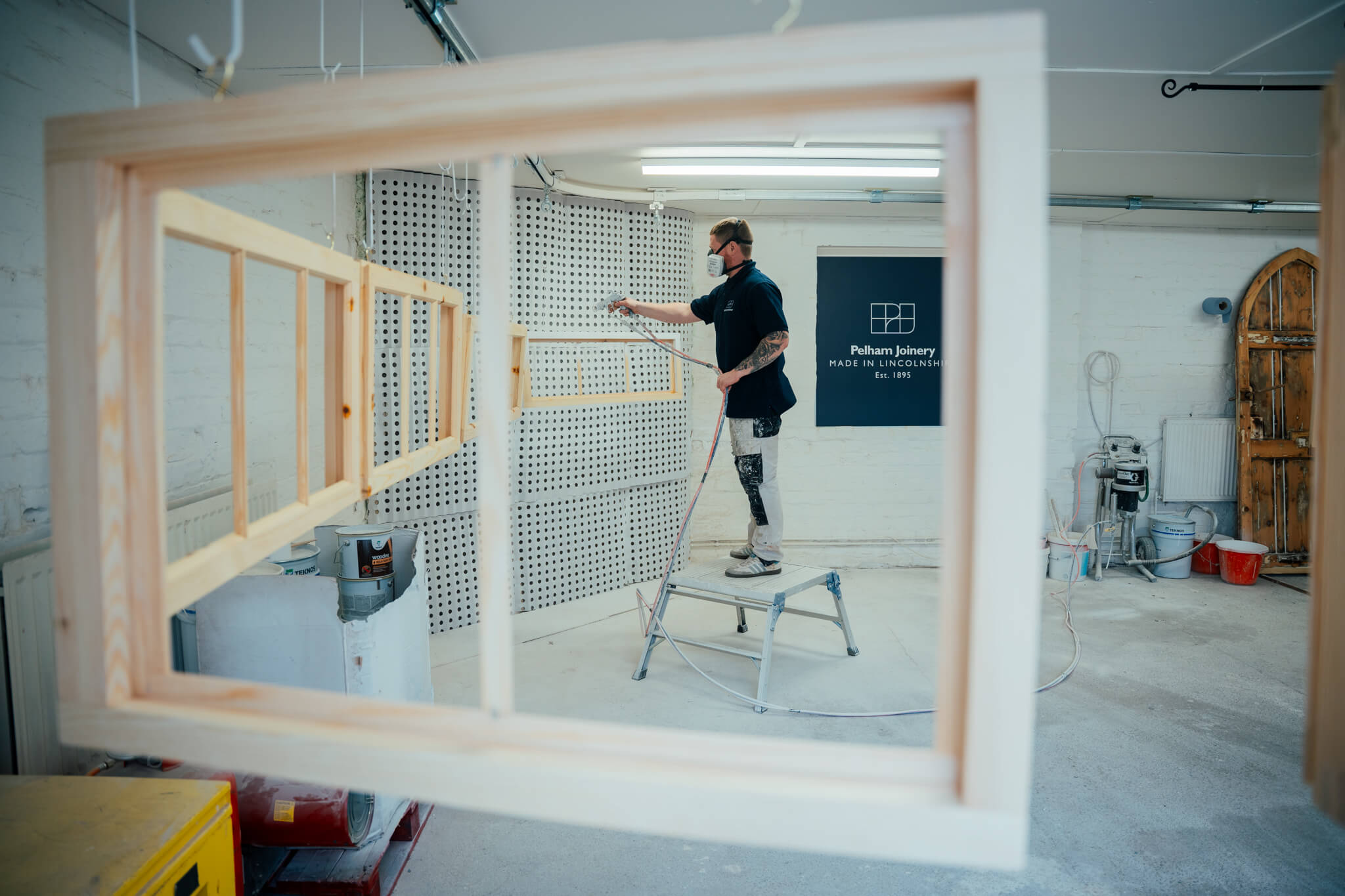
At Pelham Joinery, we carefully select paints that meet our exacting standards for both performance and environmental responsibility. We use premium water-based paint systems from Anker Stuy and Teknos, which are specifically formulated for external joinery and timber windows.
Our chosen paints offer outstanding weather resistance, excellent adhesion to timber, and superior colour retention. They’ve been tested in real-world conditions to ensure they can withstand the British climate – from driving rain to intense UV exposure.
We also consider the complete paint system, not just the topcoat. Proper preparation with appropriate primers and undercoats is essential, and we ensure every layer in our process is compatible and designed to work together for maximum protection and longevity.
There are occasions, however, especially for window repair and renovation, when the use of oil-based paints is required. Our painting team understand the best way to work with solvent-based paints and achieve a flawless finish.
How long will your paintwork last?
With proper application and appropriate maintenance, you can expect high-quality water-based paint systems on timber windows and joinery to last between 8-10 years before requiring a full repaint. However, this lifespan depends on several factors, including exposure to the elements, the orientation of your windows (south-facing windows typically experience more UV damage), and how well the paintwork is maintained.
Regular maintenance can significantly extend the life of your paintwork. Small touch-ups carried out promptly prevent minor issues from developing into more serious problems that could affect the timber beneath.
Looking after your paintwork
Maintaining your painted timber windows and joinery doesn’t require significant effort, but a little regular care goes a long way:
Clean regularly: Wash your window frames at least twice a year using warm water and a mild detergent. A soft cloth or sponge is all you need – avoid abrasive materials that could scratch the paint surface. Pay particular attention to removing dirt and debris from crevices where moisture can accumulate.
Inspect annually: Take time each year to examine your paintwork closely. Look for any signs of cracking, peeling or damage, particularly around joints and at the bottom of frames where water exposure is greatest. Early detection means easier repairs.
Address issues promptly: If you spot any damage, don’t delay in addressing it. Small areas of damaged paint can be carefully prepared and touched up before they allow moisture to penetrate the timber. Keep some of your original paint colour for exactly this purpose.
Keep drainage clear: Ensure that drainage channels and weep holes in your windows remain clear of debris. Proper water management is crucial to preventing paint deterioration and timber damage.
Avoid harsh chemicals: Stick to gentle cleaning products. Aggressive cleaners can damage the paint film and reduce its protective qualities. If you’re unsure about a cleaning product, test it on an inconspicuous area first.
Consider professional inspection: Every few years, it’s worth having your windows and joinery professionally inspected. Experts can spot potential issues that might not be obvious to the untrained eye and can advise on when maintenance painting might be needed.
The paint on your timber windows and joinery is far more than decorative – it’s the first line of defence protecting your investment against the elements. By choosing the right paint system and maintaining it properly, you’ll ensure your beautiful timber features continue to enhance your home for many years to come.
If you’d like to discuss paint options for your project or need advice on maintaining existing timber windows, our team at Pelham Joinery is always happy to help.